Do I Need to Pump Before a Septic Inspection?
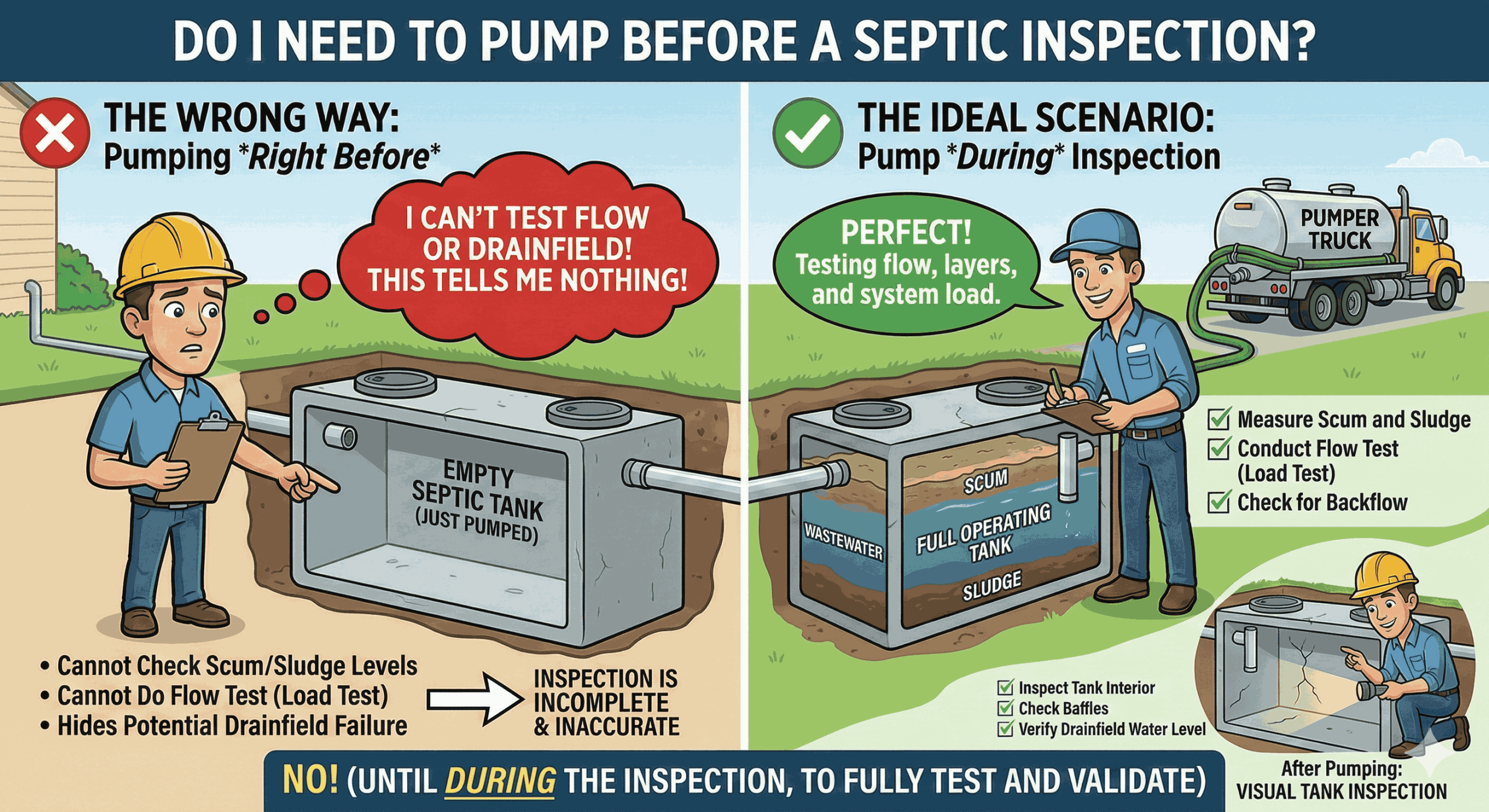
This is one of the most common questions homeowners ask: Do I need to pump before a septic inspection? The honest answer is sometimes — and it depends on your system history, the reason for the inspection, and what needs to be verified.
Below is a clear breakdown of when pumping before an inspection is recommended, when it may not be necessary, and how to avoid delays (especially for home sales).
Short answer
-
If you don’t know when it was last pumped, it’s often smart to pump (or at least be ready to).
-
If you’re buying/selling a home, pumping is commonly recommended to keep escrow moving.
-
If you have symptoms (slow drains, odors, alarm beeping), pumping may be part of the solution — but an inspection helps confirm what’s really going on.
When you SHOULD pump before a septic inspection
1) You don’t know the last pump date
If you’re not sure when it was last pumped (or you recently bought the home), pumping helps establish a clean baseline and reduces the chance of surprises during the inspection.
Why it matters: an overdue tank can hide problems and increase the risk of backups.
2) You’re seeing warning signs
If you have any of these symptoms, don’t wait:
-
Slow drains across multiple fixtures
-
Gurgling toilets or bubbling drains
-
Sewage odors inside or outside
-
Soggy ground near the septic area
-
Septic alarm beeping (pump systems)
Why it matters: symptoms can indicate an overfull tank, clogged filter, pump issue, line restriction, or drain field saturation. Pumping may help, but the inspection confirms the root cause.
3) The inspection is for a home sale / escrow
If you’re selling, pumping before listing (or early in escrow) often prevents delays and keeps the process smoother.
Why it matters: buyers, agents, and inspectors want confidence the system is maintained. An overdue tank can turn into a negotiation issue fast.
4) You have an effluent filter and it’s never been cleaned
Many systems have an effluent filter at the outlet of the tank. If it’s clogged, it can cause slow drains and backups and may get flagged during an inspection.
Why it matters: filter restriction can look like a bigger problem. Cleaning/pumping helps clarify what’s going on.
5) Your household usage has increased recently
More people in the home, guests, or heavy laundry periods can fill a tank faster than expected.
Why it matters: even if you’re “not due yet,” higher usage can change the timeline.
When you MAY NOT need to pump before an inspection
1) You have recent pumping records
If you have documentation showing the tank was pumped recently and you’re not having symptoms, pumping before an inspection may not be necessary.
2) The inspection is routine and the system is stable
If you’re doing a routine check to stay ahead of maintenance, an inspection can be done without pumping first — and then the inspector can recommend pumping based on solids levels.
3) The goal is diagnosis (not maintenance)
If you’re trying to diagnose a specific issue, it can be better to inspect first so you don’t “reset” the evidence before understanding what’s happening.
Why pumping can help (but isn’t always the first step)
Pumping can:
-
Reduce backup risk
-
Lower stress on the drain field
-
Help evaluate certain components (depending on access)
-
Establish a baseline for future maintenance
But pumping doesn’t automatically fix everything. If the drain field is saturated or there’s a line restriction, the issue may persist until the real cause is addressed.
Best approach if you’re not sure
If you’re unsure, here’s the simplest plan:
-
Schedule an inspection
-
Provide your last pump date (if known) and any symptoms
-
Follow the recommendation on whether pumping first makes sense
A good septic company will guide the order based on your system type and what you’re trying to accomplish.
How to prepare (so your inspection goes smoothly)
-
Clear access to the suspected tank area
-
Secure pets
-
Have any service records ready (pumping receipts, repairs, as-builts)
-
Confirm power is available (pump systems)
-
Avoid running multiple water-heavy appliances right before the visit unless requested
Need an inspection (and guidance on pumping)?
If you’re in Snohomish County, King County, or Camano Island, we can help you figure out the right order and avoid last-minute surprises.
A Wesco Septic, Inc.
📞 (360) 668-6561
✉️ info@awescoseptic.com